
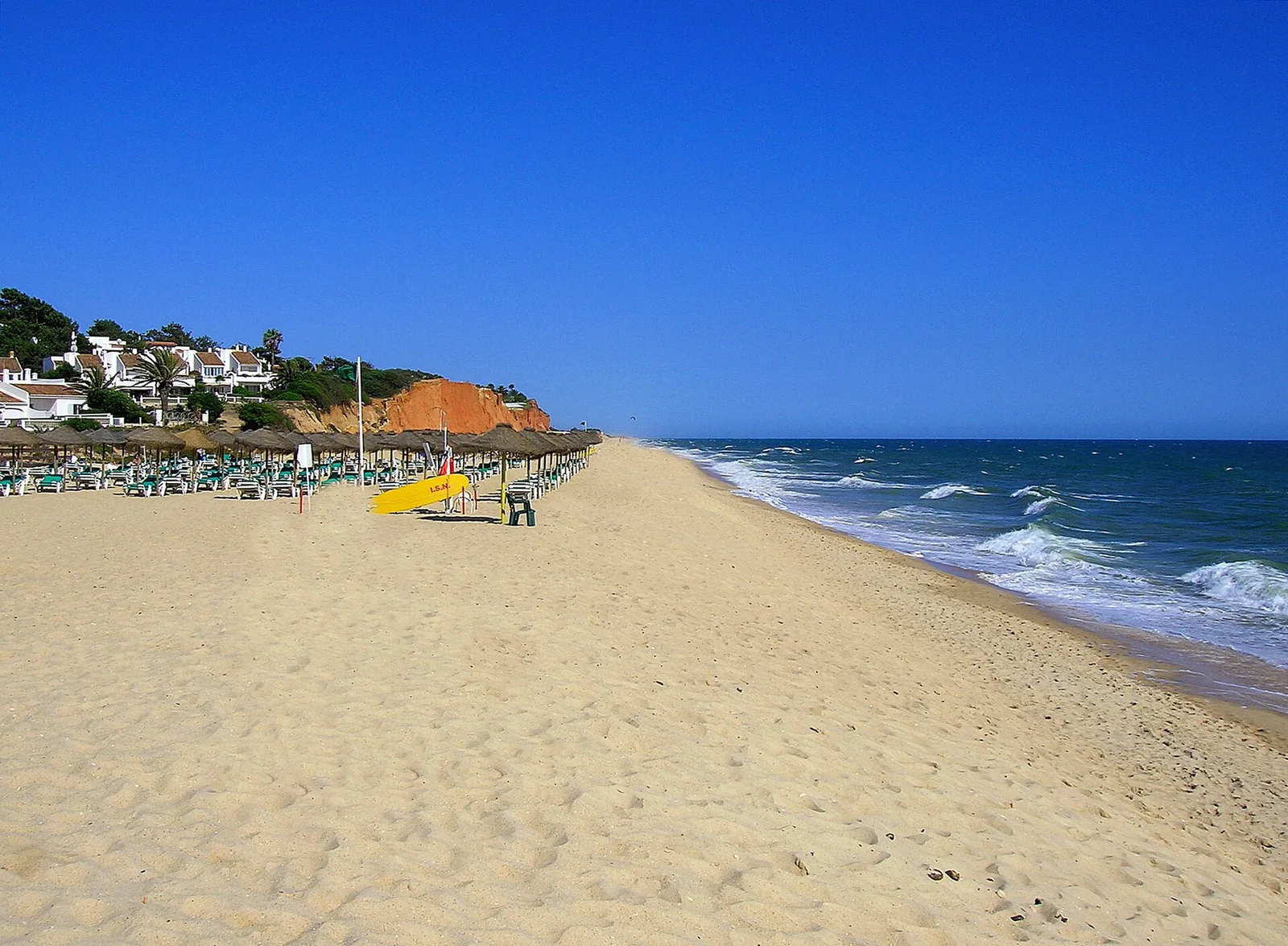
Understand the beach setting
The shore connects visually with neighbouring beach sectors, while the resort and golf landscape sit above and behind parts of the coast. Use the official entrance you intend to visit rather than assuming every point along the cliffs provides a way down.
A short visit can be about the view and a walk rather than swimming. For a full day, choose the part of the shore that works with your accommodation or transport. There is no need to move repeatedly along the sand to appreciate the setting.
Choose the exact access point
Trace the whole route from parking, drop-off or accommodation to the sand. If someone needs a gentler or step-free approach, ask about the specific entrance and surface rather than relying only on a general beach description.
With children or equipment, consider the return after several hours outdoors. A shorter practical route can make more difference than an extra feature at a more awkward entrance. Agree a meeting point before the group separates and save its pin if you are being collected.
Separate the beach from paid facilities
The resort describes beach and pool services around the coastal area, but those services have their own terms. Confirm a sunbed, pool or other arrangement if it is part of your plan. Do not assume an accommodation booking includes every facility shown in resort photographs.
A simple day with your own manageable setup is a different outing from one built around a reserved service. Choose what fits your group and budget, then plan the arrival accordingly. Clear expectations leave more time to enjoy the beach itself.
Give the cliffs and sea their space
Stay away from the foot and edge of cliffs and follow any signs or barriers. Do not use an overhang as shade or try to descend where no designated route exists. The red-cliff backdrop is a reason to choose the setting, not a reason to ignore the access guidance.
For swimming, follow beach flags and local instructions. A photograph of calm water or a warm forecast does not guarantee the same conditions during your visit. Keep a shore-based plan when the sea is not suitable for what you intended.
Make a longer coast walk a separate plan
If you want to walk along the sand towards another sector, choose a turnaround and consider the tide, sea and return distance. A continuous-looking view does not establish that every passage is comfortable at every time. Turn back when the route or conditions no longer suit.
Travel light for a walking outing and keep a full beach setup for another day if that is easier. Arrange any pickup at a named road-accessible point before leaving. A manageable walk with time to pause can be more enjoyable than turning the long coast into a distance challenge.