
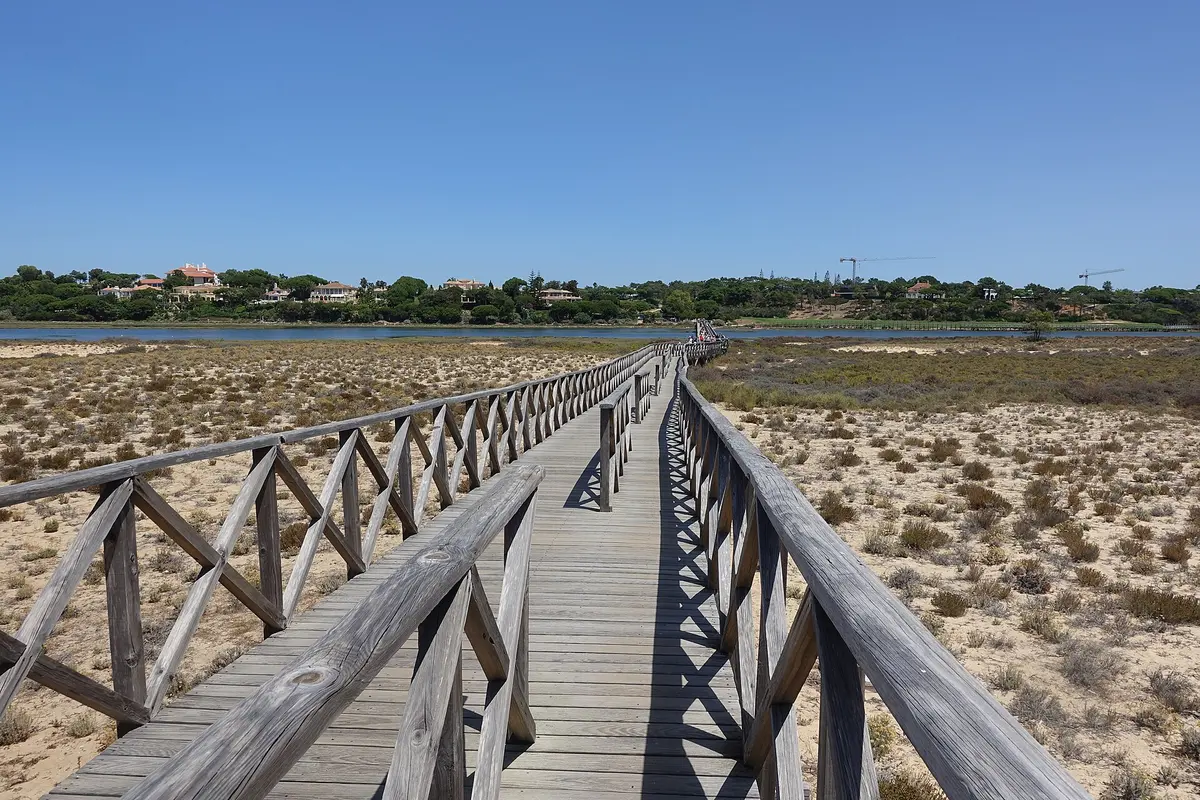
Choose a landscape first.
The Algarve’s nature outings are not all cliff walks. Eastern lagoons and saltmarshes offer birdwatching and waterside paths; the west has exposed Atlantic beaches and headlands; inland, the terrain rises into a different pattern of hills, villages and vegetation. The most useful choice is often the landscape closest to your holiday base.
Match the route to the group. A promenade, boardwalk and signed hillside trail create very different demands, even if all are described as a walk. For wheelchair or pushchair access, look at the whole approach, surface and facilities rather than taking a short level stretch as proof that an entire route is accessible.
| Landscape | Start exploring around | A good first plan |
|---|---|---|
| Lagoon, islands and saltmarsh | Faro, Olhão, Tavira, Quinta do Lago | A short lagoon-side walk or a guided boat outing |
| Atlantic coast and headlands | Sagres, Carrapateira, Aljezur, Odeceixe | A signed coastal route suited to the weather |
| Salt-working wetlands | Castro Marim and Vila Real de Santo António | Birdwatching from the established paths |
| Wooded hills and inland villages | Monchique and the inland Algarve | A shorter hill walk with a village stop |
Birds and lagoon life in the Ria Formosa.
The Ria Formosa is a changing landscape of channels, mudflats, saltmarshes, dunes and barrier islands. Its birdlife is one of the reasons to slow down here. Binoculars and a little patience can turn a modest path into a rewarding morning, without promising a sighting of any particular species.
Choose a gateway instead of trying to see the whole park in one day. Faro, Olhão and Tavira give different access to boats, islands and walking areas. The Marim environmental centre near Olhão is a starting point for an introduction to the habitats and observation areas.
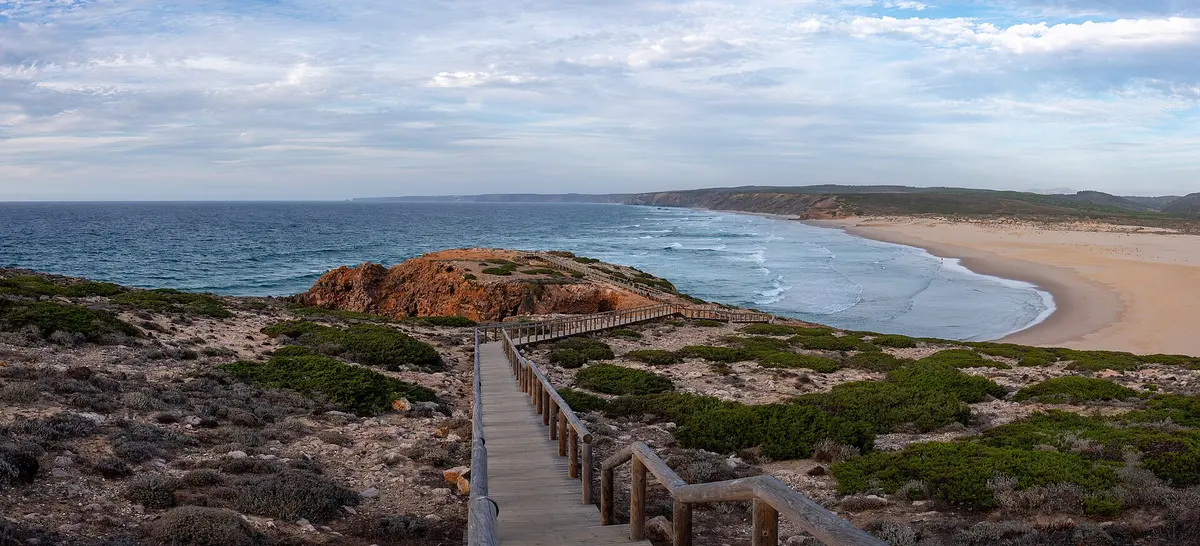
The Atlantic coast rewards a careful pace.
Around Sagres and the Costa Vicentina, the appeal is the scale of the coastline: long beaches, dark rock, dunes and open views. Make the outing about a chosen route or viewpoint rather than a list of beaches to rush between. Wind can make a headland feel much more exposed than the village where you began.
Stay on established paths, keep away from cliff edges and respect barriers or nesting areas. A beach reached by a steep path is a different proposition from a viewpoint beside a road. Our individual beach guides explain the approach and parking so you can decide before making the descent.
Inland hills, saltpans and the seasons.
Monchique gives a hill-country contrast to the seafront, while Castro Marim’s reserve connects salt-working landscapes with bird habitat. These are different trips, so choose the one that works geographically with your stay. A village lunch or a castle viewpoint can add context without making the nature outing too long.
Winter brings more water to some habitats and spring can bring flowers, while summer heat makes early starts and shorter routes useful. For any season, carry water, avoid disturbing wildlife and leave plants where they grow. Follow local fire restrictions and closures when choosing an inland route.