Sunlit coastlines, long summers and plenty of reasons to explore beyond the beach. Get to know the Algarve’s seasons, compare the monthly averages and find the forecast for your holiday.
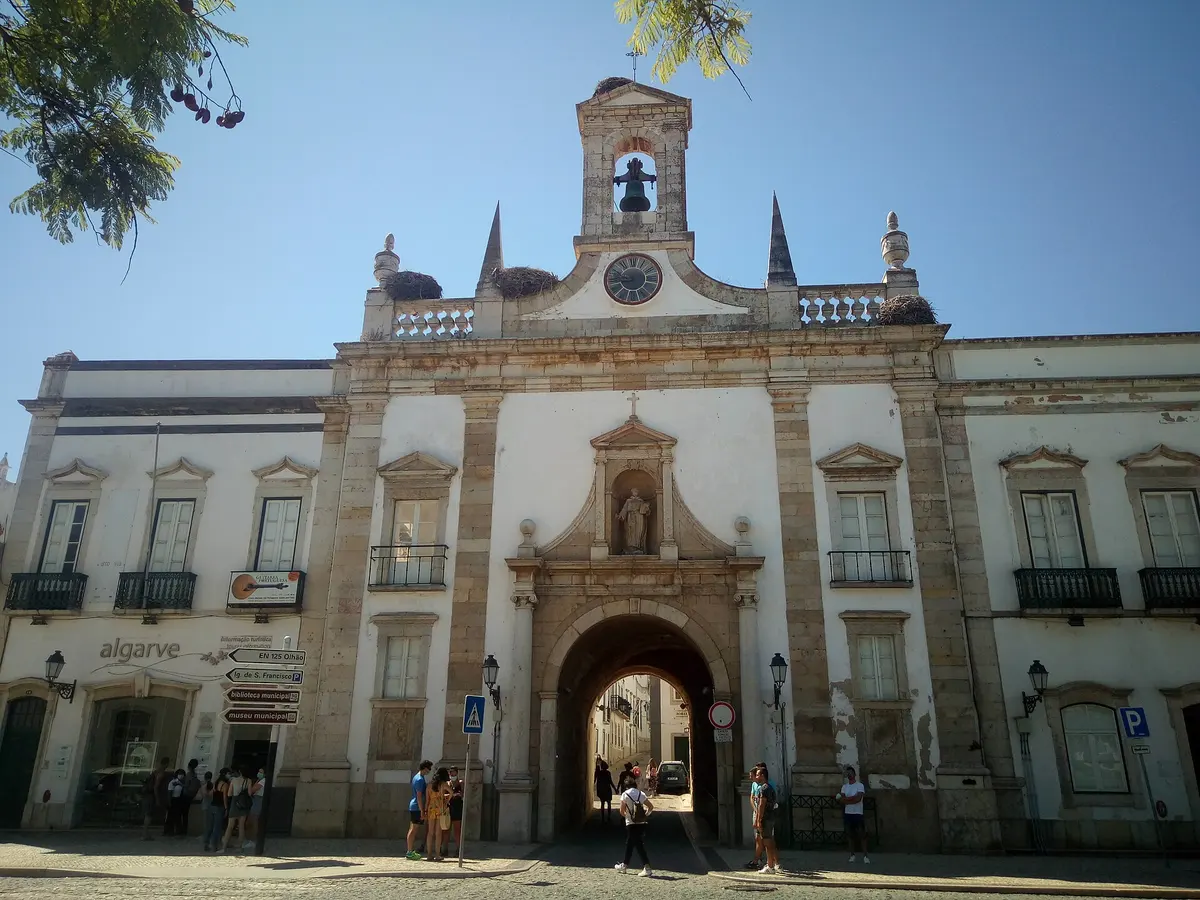
Faro, a starting point for exploring the Algarve.Photo credits
3,000+Sunshine hours a year*
29.4°CAverage July high in Faro
49 daysFaro’s annual rain-day average
35 placesLocal weather guides to explore
*VisitPortugal’s regional sunshine figure. Temperature and rain-day figures: Faro, IPMA 1991-2020 normals; a rain day has at least 1 mm of precipitation.
A year on the Algarve
Weather by month.
These two coastal stations show how conditions change along the Algarve. The figures are IPMA’s 1991-2020 climate averages, rather than a prediction for your holiday dates.
Average highDaily meanAverage low
Faro: monthly temperatures and rainfall
Month
Average high
Daily mean
Average low
Rainfall
Rain days
January
16.3°C
12.3°C
8.3°C
49.3 mm
6.0
February
17.0°C
12.9°C
8.8°C
41.9 mm
5.4
March
18.9°C
14.9°C
10.8°C
46.8 mm
5.6
April
20.7°C
16.6°C
12.4°C
39.0 mm
5.3
May
23.5°C
19.3°C
15.0°C
26.2 mm
3.8
June
26.8°C
22.3°C
17.8°C
5.1 mm
0.8
July
29.4°C
24.5°C
19.6°C
0.9 mm
0.2
August
29.2°C
24.6°C
19.9°C
3.0 mm
0.2
September
26.4°C
22.4°C
18.3°C
21.5 mm
1.9
October
23.3°C
19.6°C
15.8°C
56.0 mm
6.0
November
19.6°C
15.7°C
11.9°C
75.5 mm
6.6
December
17.1°C
13.4°C
9.7°C
90.0 mm
7.0
Rain days have at least 1 mm of precipitation. Annual average: 455.1 mm across 48.9 rain days. Highs and lows are averages of daily maximum and minimum temperatures. IPMA station 554 data.
Average highDaily meanAverage low
Sagres: monthly temperatures and rainfall
Month
Average high
Daily mean
Average low
Rainfall
Rain days
January
16.1°C
12.3°C
8.5°C
53.3 mm
7.4
February
16.3°C
12.6°C
8.8°C
48.5 mm
6.3
March
17.8°C
14.2°C
10.6°C
48.8 mm
6.3
April
19.1°C
15.5°C
12.0°C
34.7 mm
5.7
May
21.5°C
17.7°C
13.9°C
22.1 mm
3.9
June
23.9°C
20.0°C
16.2°C
3.7 mm
0.7
July
25.2°C
21.1°C
17.0°C
1.0 mm
0.2
August
25.9°C
21.7°C
17.4°C
1.5 mm
0.4
September
24.9°C
20.8°C
16.7°C
18.5 mm
2.5
October
22.4°C
18.7°C
15.0°C
61.4 mm
6.7
November
19.0°C
15.3°C
11.7°C
82.0 mm
8.4
December
17.0°C
13.5°C
9.9°C
75.2 mm
8.0
Rain days have at least 1 mm of precipitation. Annual average: 450.5 mm across 56.6 rain days. Highs and lows are averages of daily maximum and minimum temperatures. IPMA station 533 data.
How sunny is the Algarve?
VisitPortugal describes the Algarve as enjoying more than 3,000 hours of sunshine a year. That abundance of light is part of the pleasure of being here: breakfasts outside, time along the waterfront and an evening that invites one more stroll.
Sunshine hours measure the time the sun is shining. They do not mean every day stays clear from morning to night. A day can have showers and bright intervals, so a rain-day total and a sunshine total describe different parts of the same climate.
When does it rain?
Faro’s monthly averages show a very dry summer and a wetter autumn and winter. A rain day means at least 1 mm during that day, rather than continuous rain from breakfast to bedtime. The table is useful for comparing seasons; it cannot tell you which dates will be wet.
Give an unsettled day a different shape: a covered market, a museum, a café or a leisurely meal. Keep your outdoor plans flexible and use the local forecast for the details.
A season for mixing the beach with time out exploring. Build your plans around towns, gardens and countryside walks, leaving room for a change of weather. A light waterproof and an extra layer are useful alongside your sunglasses. For an active holiday, look at the walking and cycling options rather than making every day depend on swimming.
Long, hot, dry summers are the classic Algarve beach season. Keep the most energetic plans for the cooler part of the day, make space for shade and choose a beach for its setting as well as its name. Rota Vicentina recommends avoiding demanding trail walks and cycle rides in the hottest summer months.
Think beach time when conditions suit, with markets, town visits and long lunches alongside it. The transition into the wetter part of the year makes a flexible itinerary worthwhile. A forecast for your actual destination is more useful than assuming the whole Algarve will have the same afternoon.
The region’s winters tend to be mild and wet, which gives a different kind of holiday from high summer. Pack for cool evenings and occasional rain, then make use of brighter spells for exploring. Short walks, museums and cafés can sit comfortably in the same day. Rota Vicentina’s recommended walking season includes winter, with plans adjusted to the conditions.
The Atlantic and the hills help shape the region’s weather. A forecast or climate table for one coastal town will not describe every headland, valley and hillside.
The Atlantic west
Ocean influence is particularly clear around Sagres and the west coast. Sagres’ August average high is 25.9°C, compared with Faro’s 29.2°C in the same climate period. Compare both tables before choosing between an exposed Atlantic setting and the south coast.
The Algarve’s tourism nature guide describes the eastern sector as generally warmer and drier, with less Atlantic moderation. Faro is a helpful south-coast reference, while the destination forecasts provide the detail for places such as Albufeira, Vilamoura and Tavira.
Altitude changes the picture again. The Serra, Barrocal and coast have distinct settings, and a day in Monchique can feel different from one beside the sea. Bring layers for an outing into the hills and use that area’s own forecast when planning your day.
Warmth is only part of sun exposure. IPMA’s UV guidance calls for protection as the index rises: sunglasses, a hat, clothing, sunscreen and shade all have a role. Keep an eye on the UV forecast, including on days that feel comfortable.
Choose a beach for the conditions as well as the air temperature. Wind, waves, access restrictions and lifeguard instructions all affect the day. Our beach guides include the local setting, and the illustrated safety guide explains the flags.
Rota Vicentina recommends September to June for its trails and demanding cycling routes. July and August call for a different approach to outdoor plans. Choose a route and time that suit the conditions, with water, suitable clothing and places to rest.